India and Nepal Adopt New Joint Vision, India Announces ₹15,000 Crore Development Assistance
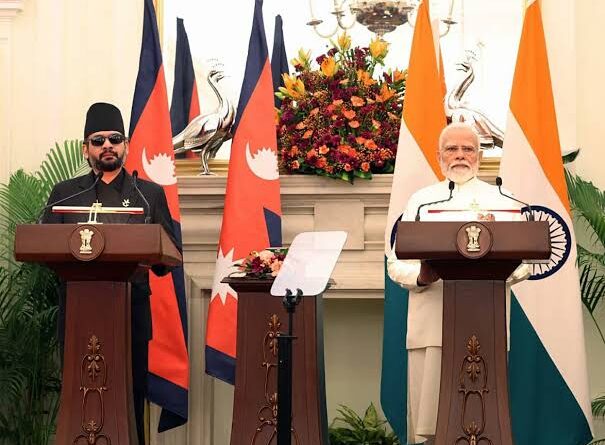
New Delhi: India and Nepal have agreed to strengthen their bilateral partnership through a new joint vision covering economic cooperation, infrastructure, energy, trade and regional connectivity. The announcement followed discussions between Prime Minister Narendra Modi and Nepal Prime Minister Balendra Shah in New Delhi on Monday.
The two leaders reviewed the full range of bilateral relations during Shah’s state visit from November 22 to 23. They emphasised the importance of historical and people-to-people ties while recognising the need to adapt cooperation to changing economic and technological conditions.
As part of the new framework, India announced development assistance worth ₹15,000 crore to Nepal. This includes ₹3,500 crore in grant assistance for post-disaster reconstruction and new infrastructure projects, along with a rupee-denominated line of credit of ₹11,500 crore for energy-sector projects.
The two countries also agreed to review existing bilateral agreements, including the 1950 Treaty of Peace and Friendship, through mutual consent. Both sides stated that outstanding matters relating to water resources, energy, trade and boundary issues would be addressed through dialogue.
Connectivity emerged as another important area of cooperation. The leaders welcomed the launch of a direct express rail service between Ayodhya and Janakpur and a motorable bridge across the Mahakali River connecting Dharchula in India with Darchula in Nepal.
The discussions also covered additional railway connections, cross-border infrastructure, petroleum supply networks and digital payment cooperation. Both countries agreed to strengthen electricity trade and encourage investment in Nepal’s hydropower and transmission infrastructure.
Cooperation in disaster management and climate resilience was also included in the joint vision. The two sides agreed to improve the sharing of weather and hydrological information and strengthen early-warning arrangements.
India and Nepal will activate a High-Level Monitoring Group to review progress on the agreed initiatives. The group will meet at least once every six months and report to the India-Nepal Joint Commission.
The outcome of the visit provides a framework for expanding cooperation between the two neighbouring countries across economic, infrastructure and strategic sectors.


