India to Lead Delegation at ASEAN Defence Ministers’ Meeting-Plus in the Philippines
India will lead a delegation to the 13th ASEAN Defence Ministers’ Meeting-Plus (ADMM-Plus) in Cebu, the Philippines, from October 28 to 29, as New Delhi seeks to strengthen defence cooperation and strategic partnerships in the Indo-Pacific region.
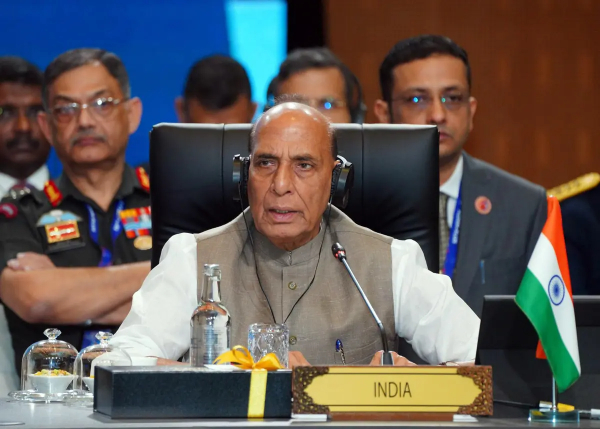
Defence Minister Rajnath Singh will represent India at the meeting, where he is scheduled to address a session on the exchange of views on regional and international security issues, according to the Ministry of Defence.
On the sidelines of the meeting, Singh is expected to hold bilateral discussions with defence ministers from participating countries. The talks will review existing defence ties and explore opportunities to expand cooperation.
ADMM-Plus brings together the 11 ASEAN member states and eight dialogue partners: India, China, the United States, Russia, Japan, South Korea, Australia and New Zealand. The platform provides a forum for discussing shared security concerns and developing practical cooperation among participating countries.
The meeting is the highest-level defence consultative and cooperative mechanism within ASEAN’s defence framework. It supports dialogue and joint efforts in areas related to regional security and stability.
India became a dialogue partner of ASEAN in 1992 and has participated in ADMM-Plus since the forum’s inaugural meeting in Hanoi in 2010. Since 2017, defence ministers have met annually to strengthen cooperation.
India is also co-chairing the Experts Working Group on Counter-Terrorism with Malaysia for the 2024–2027 cycle. Counter-terrorism cooperation remains one of the areas in which India works with regional partners.
The upcoming meeting provides an opportunity for participating countries to exchange views on emerging security challenges and reinforce communication among defence establishments.
India’s participation is part of its broader engagement with Southeast Asia under the Act East policy. The outcomes of the meeting and bilateral discussions may help identify areas for further cooperation, although any new agreements or initiatives would depend on decisions taken by the participating governments.