India Hosts Second Day of SCO Civilisational Dialogue, Highlights Shared Cultural Heritage
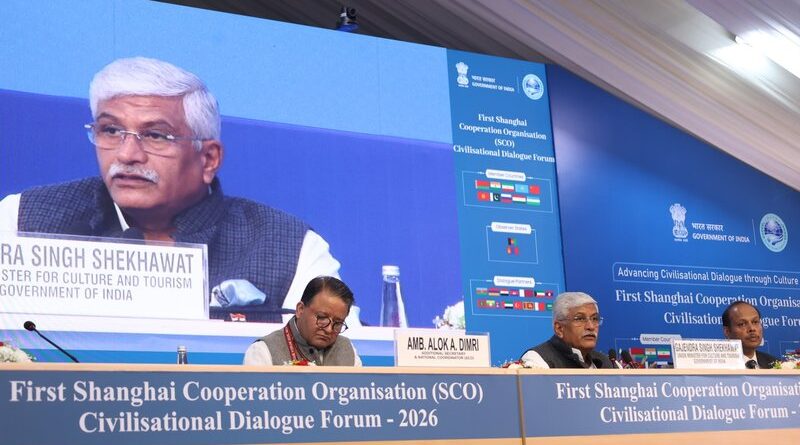
New Delhi: India hosted the second day of the Shanghai Cooperation Organisation (SCO) Civilisational Dialogue Forum in New Delhi on Saturday, bringing together representatives from member countries to discuss shared cultural heritage, historical connections and opportunities for regional cooperation.
The discussions focused on cultural expressions, art and architecture, and historical trade relations among different civilisations. Ministers, senior officials, academicians, historians and cultural experts from SCO member states and dialogue partner countries participated in the sessions.
Union Minister for Culture and Tourism Gajendra Singh Shekhawat chaired the first and second joint sessions on civilisational and cultural expressions.
Addressing the gathering, Shekhawat highlighted the importance of historical connections in bringing countries closer and said cultural cooperation could help strengthen mutual understanding, trust and friendship.
He also emphasised the need to use shared cultural knowledge and heritage to promote institutional partnerships, cultural exchanges and meaningful cooperation among participating countries.
Pakistan’s Federal Minister for Climate Change and Environmental Coordination, Musaddiq Masood Malik, also participated in the discussions. Referring to the historical significance of Purana Qila, where the forum is being held, he highlighted the different cultural influences reflected in the monument’s history.
Malik said the site represented different historical traditions and demonstrated how diverse cultural identities could exist together. He also stressed the importance of recognising different identities while encouraging dialogue among communities.
The First SCO Civilisational Dialogue Forum is being hosted by India from November 20 to 22. Prime Minister Narendra Modi inaugurated the event on November 20.
The forum aims to strengthen cultural connections among SCO countries and encourage people-to-people engagement through discussions on shared history, traditions, literature, architecture and other cultural expressions.
The participation of representatives from different countries provides an opportunity to exchange perspectives and explore areas of cooperation beyond conventional diplomatic and economic discussions.
The initiative highlights the role of cultural diplomacy in building understanding and strengthening regional relationships.


